

Key Points:
- Financially planning for retirement is complex as it requires advanced preparation and expecting the unexpected.
- Your expenses throughout retirement will fluctuate based on your wants and needs.
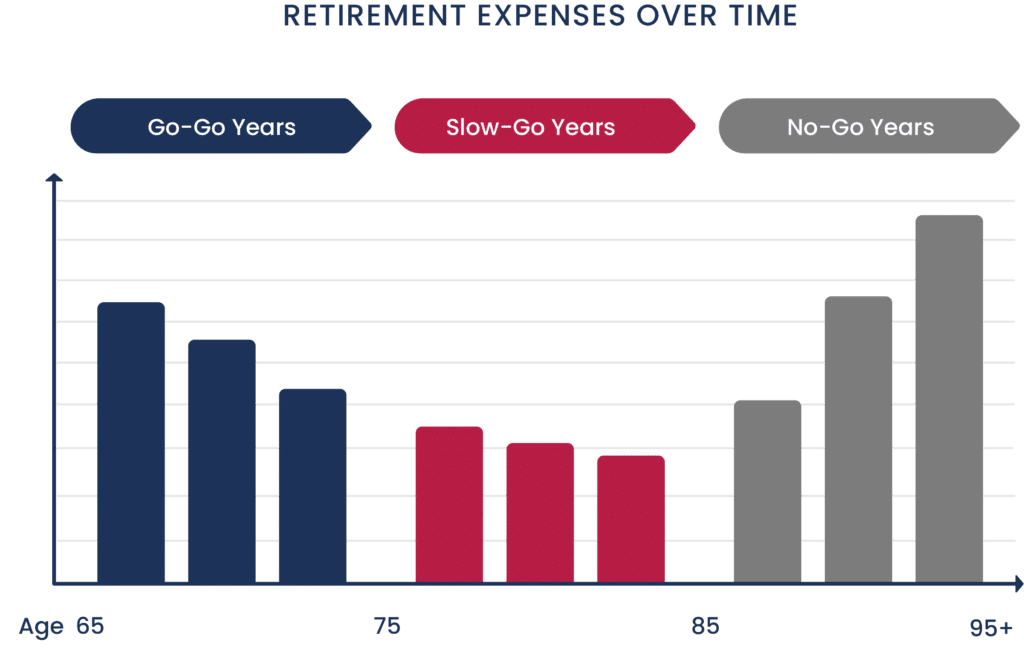
- On average, most retirees’ expense curve is characterized by high spending during the go-go years, reduced spending during the slow-go years, and highest spending during the no-go years.
Introduction
Retirement is dynamic, and so are the factors that influence your spending. Three realities make long-term planning more nuanced:
- Your expenses will change over time.
- Inflation will affect the value of your money.
- Life brings unexpected events you can’t always plan for.
To develop a realistic financial picture, start by gathering as much personal data as possible: information about your health, local cost of living, insurance coverage, and pension system. Once you have this foundation, compare your findings to common patterns shown in the Retirement Spending Curve (sometimes referred to as the Retirement Expense Graph). This curve illustrates how spending typically evolves throughout retirement and can help you anticipate future needs and make more informed decisions.
Go-Go Years (Ages 65–75)
The Go-Go Years are often the most active and adventurous stage of retirement. With fewer work-related responsibilities, many people find themselves energized and eager to enjoy the freedom they’ve worked so hard to achieve. Travel, new hobbies, family visits, and long-anticipated bucket-list items often take center stage.
Because of this increase in discretionary activities, spending in the Go-Go Years tends to be higher, especially in areas like travel, dining, entertainment, and leisure. While these expenses are typically optional, they are also part of what makes this period exciting and fulfilling.

Slow-Go Years (Ages 75–85)
During the Slow-Go Years, many retirees naturally begin to settle into a more predictable routine. You may have already experienced much of what you set out to do in early retirement, and your lifestyle may shift toward quieter activities and closer-to-home comforts.
Health is usually still manageable at this stage, but energy levels and mobility may begin to change. As a result, spending often decreases compared to earlier years. Costs tend to stabilize, and discretionary travel or large purchases may become less frequent. These years can offer financial consistency, making budgeting easier.
No-Go Years (Ages 85+)
The No-Go Years are typically characterized by a gradual decline in health and mobility, which can significantly influence spending. While discretionary expenses usually taper off, healthcare-related expenses tend to rise.
This stage may involve increased spending on:
- Long-term care
- Home health aides or live-in support
- Assisted living or nursing home costs
- More frequent medical appointments and medications

The cost of care varies widely depending on your location and the level of support needed, making it essential to plan ahead and understand the potential financial impact.
Conclusion
Managing your finances is only one part of preparing for a meaningful retirement. While sufficient income and savings give you the ability to meet your needs and pursue your goals, a fulfilling retirement also depends on factors that money alone cannot buy—your health, sense of purpose, relationships, and the legacy you want to leave behind.
Understanding the retirement spending curve can help you plan with confidence, but remembering the human side of retirement is what makes the journey worthwhile.

